Key Highlights
- Optical coating decisions influence transmission, reflectivity, durability, and system performance.
- Early coating selection helps defense and aerospace OEMs reduce redesigns and qualification delays.
- Material selection and coating design must be evaluated together for infrared and high-performance optical systems.
- Penn Optical Coatings supports defense applications including IR optics, optical windows, range-finding optics, and satellite mirror systems.
Optical coatings are often not a high priority in the design process for defense and aerospace systems. However, for OEMs developing advanced imaging, sensing, targeting, and satellite systems, coatings must be decided early in design because they directly influence optical performance, material compatibility, durability, manufacturability, and qualification requirements.

Early collaboration can help prevent costly redesigns and program delays later in development.
The stakes are high for mission-critical applications, and the demand for these systems is only growing. The military imaging system market size alone is estimated to grow from 15.89 USD billion in 2025 to 26.11 USD billion in 2035 at a CAGR of 5.09%, driven by advanced surveillance, target acquisition, reconnaissance, search and rescue, and intelligence gathering. As systems become more complex and performance requirements more demanding, early collaboration with optical coating experts can help OEMs reduce risk while maximizing system performance.
Optical Coatings Impact System Performance
Every optical system is designed around specific tolerances and compliance standards. No matter if your objective is infrared imaging, laser range finding, surveillance, or satellite communications, coating selection directly affects light transmission and optical durability in extreme environments.
Key examples of optical coating selection affecting performance:
- Anti-reflective coatings can maximize transmission: An uncoated optical surface can reflect approximately 4% of incident light per surface, while multilayer broadband AR coatings can reduce reflectance to well below 1%, allowing more light to reach sensors and detectors while improving image quality, signal strength, and overall system sensitivity.
- Reflective coatings can improve mirror efficiency: High-reflectivity coatings can achieve reflectance greater than 99%, enabling mirrors to efficiently direct and collect light in surveillance systems, targeting systems, telescopes, and satellite payloads.
- Specialty filter coatings can selectively transmit or block specific wavelengths. Engineers use bandpass, notch, edge, and dichroic filters to isolate wavelengths of interest while rejecting unwanted background light, improving signal-to-noise ratio and delivering more accurate imaging.
- Indium Tin Oxide (ITO)-based conductive coatings can add electrical functionality while maintaining optical performance. ITO-based coatings combine optical transparency with electrical conductivity, allowing engineers to add critical functionality to optical components without significantly reducing transmission. In defense and aerospace applications, they are primarily used for EMI shielding, static charge dissipation, heater circuits, and environmental protection.
Working with an optical coating supplier like Penn Optical Coatings can offer custom thin-film coatings across UV, visible, and infrared wavelengths for optics ranging from 1 mm to 1 m, supporting applications that require highly controlled optical performance.
Penn Optical specializes in durable precision optics and mirrors, with unique coatings for large optics and mirrors. Explore our coating options from single-wavelength v-coat anti-reflection to polarization control coatings to metal mirror coatings (gold, silver, and aluminum base).
Why Material and Design Decisions Need to Be Connected
Choosing an optical coating based on substrate, environmental conditions, and manufacturing constraints is critical in defense and aerospace applications where engineers may be working with infrared materials such as Germanium, silicon, zinc selenide, or other specialty substrates. Each material interacts differently with light, requiring a unique coating solution to achieve optimal transmission, reflection, or durability.
Early collaboration between OEM design teams and coating experts helps validate material choices, identify potential performance limitations, and ensure coating specifications align with real-world manufacturing capabilities.
This is particularly important for IR imaging and target acquisition systems, needing coating performance tailored to specific wavelength bands while maintaining durability under harsh environmental conditions. For instance, Penn Optical Coatings often helps suppliers select ITO-based conductive coatings early in development to align optical, electrical, and environmental performance requirements with manufacturing and material constraints for sensor windows, IR optics, aerospace optical assemblies, etc.
Optical Decisions Early-On Reduce Manufacturing Risks and Delays
Development delays occur when coating requirements are introduced after key design choices have been made, leading to delayed project timelines and costly redesigns due to needing alternative materials and additional quality testing. Engaging a coating partner early allows the supplier’s teams to evaluate feasibility before production begins, improving manufacturing consistency, reducing qualification risk, and minimizing schedule disruptions during production.
Key Use Case: Aluminum Mirrors for an Aerospace Telescope
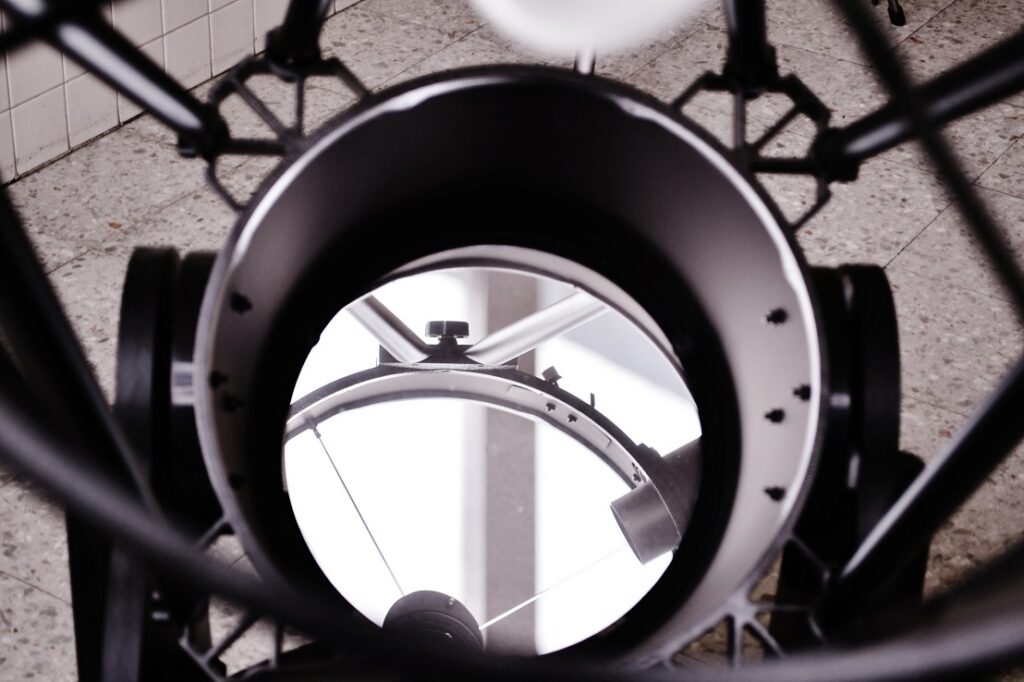
In partnership with CalTech, our team developed the tooling for a 30” optical mirror with a custom, electrically conducting AR coating in the infrared range.
For defense programs, supplier selection is also critical to compliance and procurement requirements. Choosing an ITAR-registered, ISO-certified manufacturer that serves defense and aerospace customers, like Penn Optical Coatings, helps support performance needs from the start rather than having to redesign later in the process.
How working with Penn Optical Coatings is a Strategic Advantage for Defense and Aerospace OEMs
Penn Optical Coatings supports a variety of defense and aerospace components and applications, including IR optics, target acquisition windows, range-finding optics, and space-based optical systems.
For example, low-Earth-orbit (LEO) satellite programs often rely on highly reflective optical mirrors that must balance performance, durability, and weight constraints. Specifically, designers commonly evaluate gold, silver, and aluminum-based mirror coatings, depending on wavelength requirements and environmental conditions. Penn Optical Coatings offers expertise in all three metal-based mirror coatings, helping OEMs optimize reflectivity across space-based applications.
By involving Penn Optical Coatings from the design phase, defense and aerospace OEMs can make informed decisions, reduce program risk, and improve long-term system performance, based on 40 years of experience and a coating library including over 7,500 optical coating designs.